
Government Prioritises Spending Reforms and Fiscal Consolidation, Says Finance Minister
15 October 2026 - 09:30
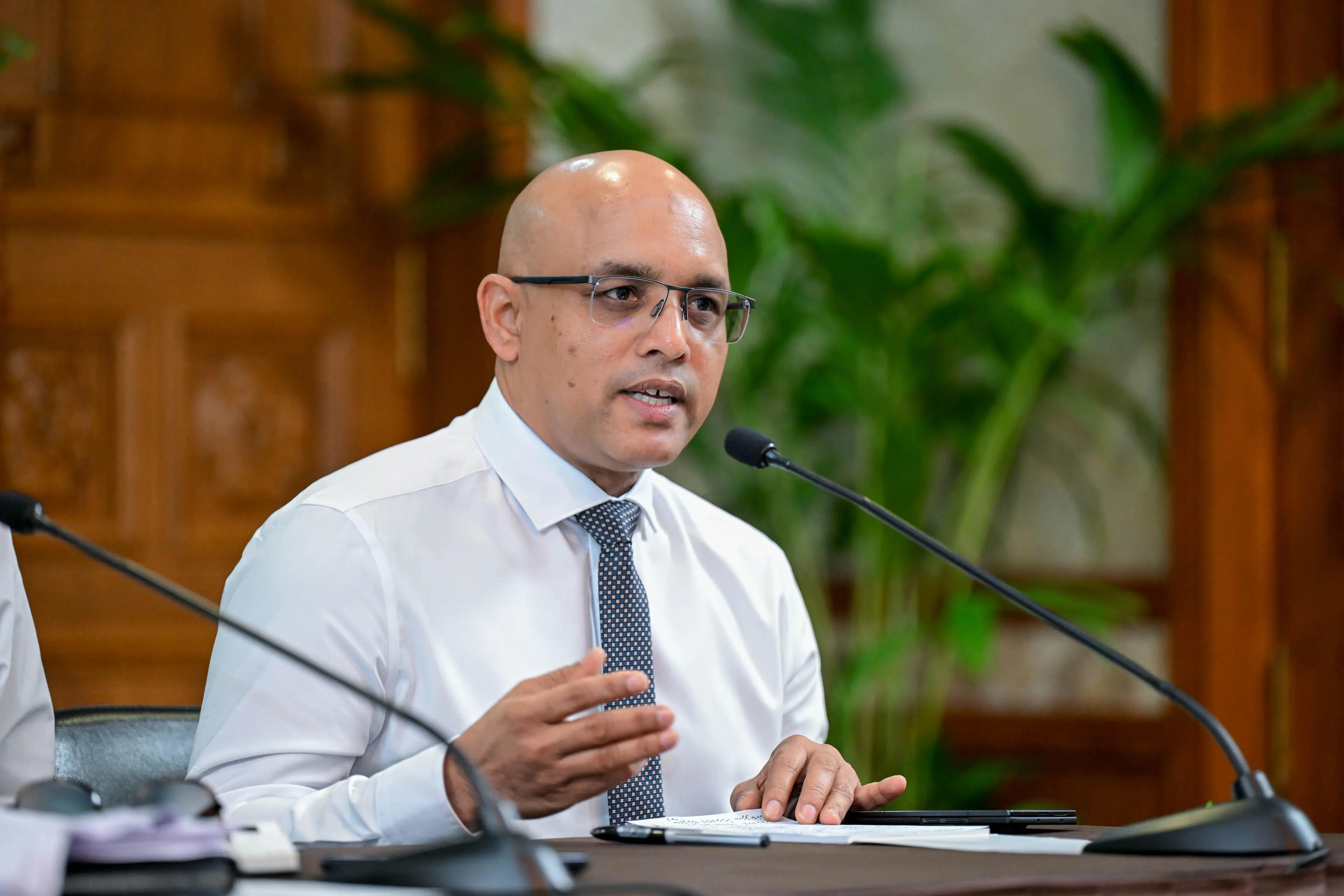
The Maldivian government is prioritising public spending reforms and fiscal consolidation as rising oil prices and a potential decline in tourism revenue place additional pressure on the economy, Finance Minister Hassan Zareer has said.
In an online interview with Reuters ahead of this week’s International Monetary Fund (IMF) and World Bank annual meetings in Bangkok, Zareer said the government was working to reduce the budget deficit while seeking continued support from international partners to strengthen the economy and foreign currency reserves.
The minister said the Maldives, which relies entirely on imported fuel, had been forced to triple its energy subsidies this year following rising global oil prices linked to instability in the Middle East.
As a result of the additional expenditure, the government’s budget deficit is now projected to reach nine per cent of gross domestic product (GDP), compared with the earlier target of 7.1 per cent.
Higher energy prices and a slowdown in tourist arrivals are also weighing on economic growth. The Maldives is now projected to record economic growth of just one per cent in 2026. However, the government expects growth to accelerate to 3.8 per cent next year and 6.8 per cent in 2028.
Zareer said the country would need to repay between 300 million and 400 million US dollars in debt annually over the coming years, with the payments expected to be financed primarily through government revenue.
He also said the 30-billion-Indian-rupee currency swap facility arranged with a neighbouring country would be renewed this month. The minister acknowledged challenges in maintaining adequate foreign reserves and said the government was working to secure dedicated facilities to build a reserve buffer.
As part of its efforts to strengthen public finances, the Maldives has secured an agreement with the World Bank to provide 250 million US dollars over the next two to three years. The government also signed a five-year framework agreement worth 1.5 billion US dollars with the International Islamic Trade Finance Corporation (ITFC) last month.
According to Zareer, the government’s economic recovery strategy also focuses on diversifying the economy and increasing investment in renewable energy. The country aims to raise renewable energy investment to 33 per cent by the end of 2028.
The government is also exploring measures to address travel-related challenges and increase tourist arrivals. These include plans to lease additional aircraft for the national airline, expand flights to Australia identified by the minister as the Maldives’ eighth-largest market and increase services in coordination with seven other airlines.
The measures form part of the government’s broader efforts to manage rising expenditure, meet debt obligations and strengthen economic resilience amid external pressures.
