
Nasheed Government’s Airport Deal with GMR Inflicts Major Losses on the Maldives
19 October 2026 - 12:23
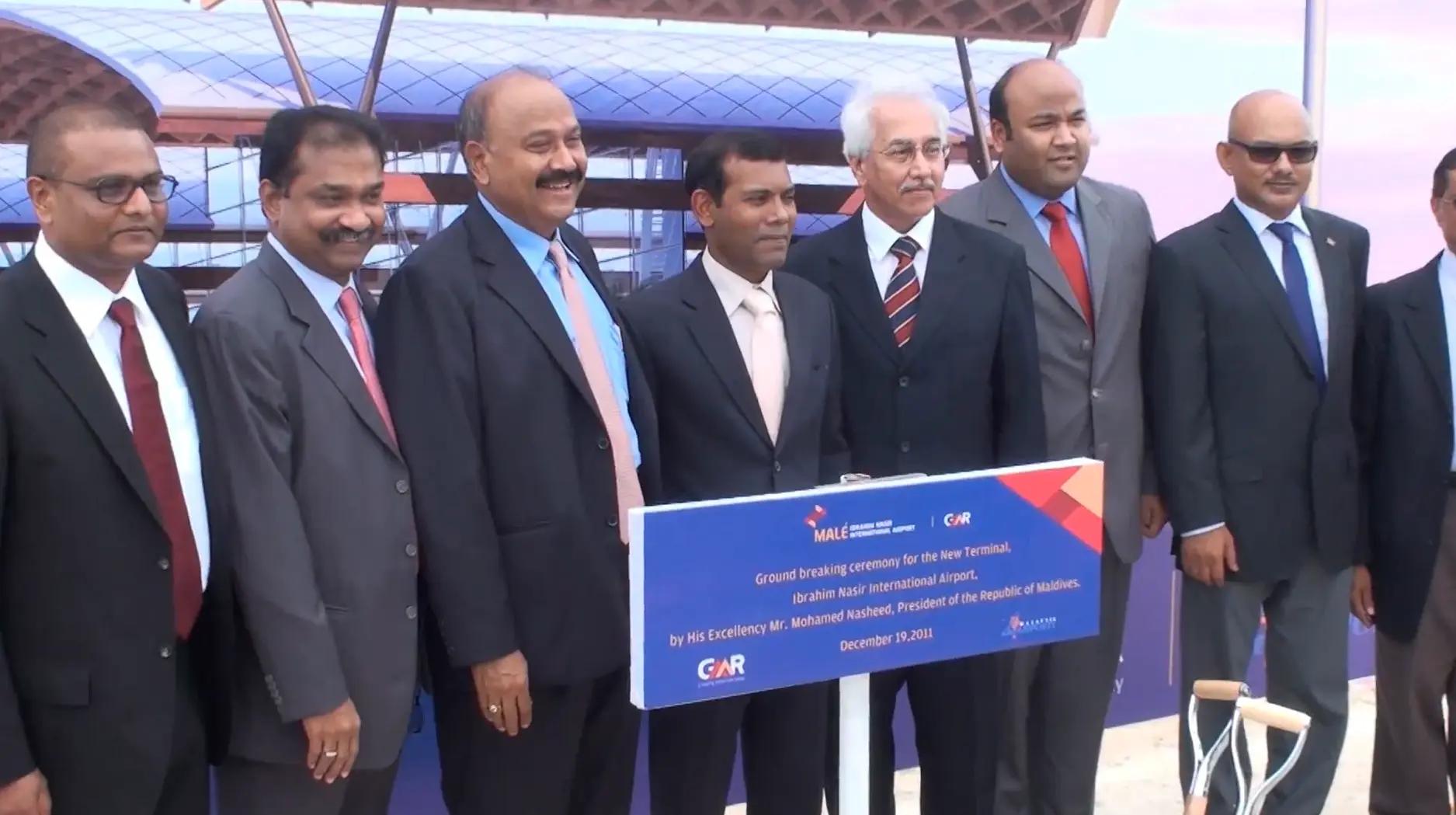
The decision by the Nasheed government to hand over the Maldives’ main gateway to GMR was one of the biggest business controversies in the country’s history and a project that allegedly caused significant losses to the state.
In 2010, under the leadership of Mohamed Nasheed, the country’s largest airport and one of its most valuable national assets were handed over to GMR for 25 years through a bidding process surrounded by controversy. The agreement was allegedly shaped by questionable maneuvers involving Nasheed and his associates. Although GMR failed the technical component of the evaluation criteria, a special meeting was reportedly held, after which the company was approved in that category under unclear circumstances. The agreement was subsequently finalised on terms that favoured the company.
Although Maldivians were promised ambitious plans to modernize the airport and complete the development by 2014, the outcome was very different. Despite the lengthy and complicated agreement, it did not include the construction of a new runway. The agreement also allegedly gave GMR broad opportunities to pursue commercial activities at the airport through provisions described as a “hidden agenda.”
For a country such as the Maldives, where foreign currency is crucial, the airport is one of the government’s most important sources of dollar revenue. However, the agreement handed GMR substantial control over this revenue-generating gateway. Once the company gained that control, it allegedly pursued an agenda that weakened Maldivian influence over airport operations.
Under the pretext of development, opportunities were opened to foreign parties in duty-free retail and other airport businesses, while foreign workers were brought in for jobs that could otherwise have benefited Maldivians. Several local businesses were reportedly closed in the name of development, with the company allegedly redirecting profits previously generated by the airport to its own interests. GMR also began strengthening its influence over jet fuel and other commercial operations, while the government provided guarantees for loans taken by the company.
Despite the lack of visible progress on major development, the company reportedly presented relatively minor improvements, such as opening toilet facilities, as evidence of airport modernization. Meanwhile, foreign executives continued to manage the business as revenue that could have benefited the Maldivian state flowed out of the country.
The airport’s most pressing infrastructure requirement at the time was a new runway to replace the ageing one. However, neither the government’s requirements nor GMR’s plans initially included the construction of a new runway. During its first week of operating the airport, GMR announced that the existing runway could continue to be used for another 35 years with minor repairs.
The issue of a new runway reportedly emerged only when GMR became convinced that the government of President Mohamed Waheed might terminate the agreement. This raised questions about whether the company’s focus had been on making substantial investments in airport infrastructure or maximizing profits while keeping investment to a minimum. The opposition MDP government was accused of failing to take effective action to prevent this.
Maldives Airports Company Limited (MACL), which had been generating MVR 4.5 billion in annual business, was among the most profitable state-owned companies. After the airport was taken back from GMR and MACL resumed operations, the company reportedly generated MVR 1 billion in profit for the state in its first year.
The airport is one of the country’s largest sources of foreign-currency revenue. When MACL operated it, a substantial share of the revenue remained in the Maldives.
The Waheed government cancelled the GMR agreement on the grounds that it was void from the outset. In response, GMR sought USD 803 million in compensation. An arbitration tribunal ultimately ruled that USD 271 million should be paid.
The USD 271 million paid by MACL to GMR included a USD 150 million loan that GMR had taken to develop the airport. Although the Yameen government subsequently paid the amount in full, the government placed the financial burden on Maldivians by cutting subsidies, then later reinstated the subsidies while presenting the move as a benefit to the public. Ultimately, the GMR controversy and the policies pursued by the MDP government cost the Maldivian people MVR 4 billion in national wealth.
