
Rasmalé Emerges as a Game-Changer for the Maldives’ Housing, Economy and Climate Resilience
1 November 2026 - 05:57
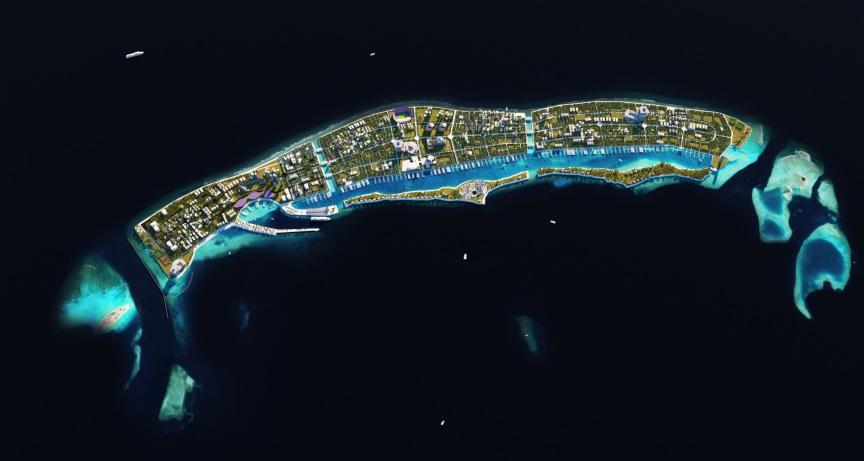
Rasmalé, also known as Fushidhiggarufalhu, is being developed as a smart and eco-friendly city through land reclamation. Described as the largest land development project in Maldivian history, it is more than just a housing initiative.
The project aims to provide a lasting solution to housing shortages in the Greater Malé area while opening new avenues for economic growth. Understanding its potential benefits to the Maldivian state and national economy is therefore important. Covering more than 1,150 hectares of reclaimed land, Rasmalé is envisioned as a transformative development with significant economic and social implications for the country.
One of the project's key anticipated benefits is addressing the long-standing housing shortage. With thousands of housing units planned for Rasmalé, the Government could reduce the recurring financial burden of housing-related expenditure on the state budget. Easing housing pressures could also help address various social challenges and create the foundation for a healthier society.
From a public revenue perspective, Rasmalé is expected to become an important source of income for the state. Special economic zones and international financial centers planned for the city could attract increased foreign direct investment (FDI) to the Maldives.
In addition to revenue from land leases, commercial property rentals and taxes, the city could expand government revenue through tourism and technology-driven businesses. Diversifying the Maldivian economy beyond its heavy reliance on tourism would be an important step towards strengthening the country's long-term fiscal stability.
The project is also expected to create new employment opportunities for thousands of young Maldivians. Jobs across construction, information and communications technology (ICT), renewable energy and financial services could stimulate domestic economic activity and contribute to growth in gross domestic product (GDP).
Meanwhile, strengthening transport links between Malé, Vilimalé, Gulhifalhu, Thilafushi and Rasmalé could improve connectivity across the Greater Malé region. An efficient transport network could reduce business operating costs and support efforts to make goods and services more affordable.
From an environmental and climate resilience perspective, Rasmalé is envisioned as a zero-carbon eco-city. By relying on renewable energy, the city could help reduce fuel import costs and the substantial expenditure associated with fuel subsidies. Its elevated reclaimed land is also intended to provide greater protection against rising sea levels. This could reduce vulnerability to climate-related disasters and potentially lower future government expenditure on disaster recovery.
Ultimately, Rasmalé represents a vision that extends beyond land reclamation and housing development. It is intended to lay the foundation for the Maldives' future by addressing housing challenges, expanding government revenue and supporting sustainable economic growth.
