
NASHEED WARNS OF RELIGIOUS NATIONALISM AS MDP'S IDEOLOGICAL DIVISIONS DEEPEN
1 November 2026 - 10:47
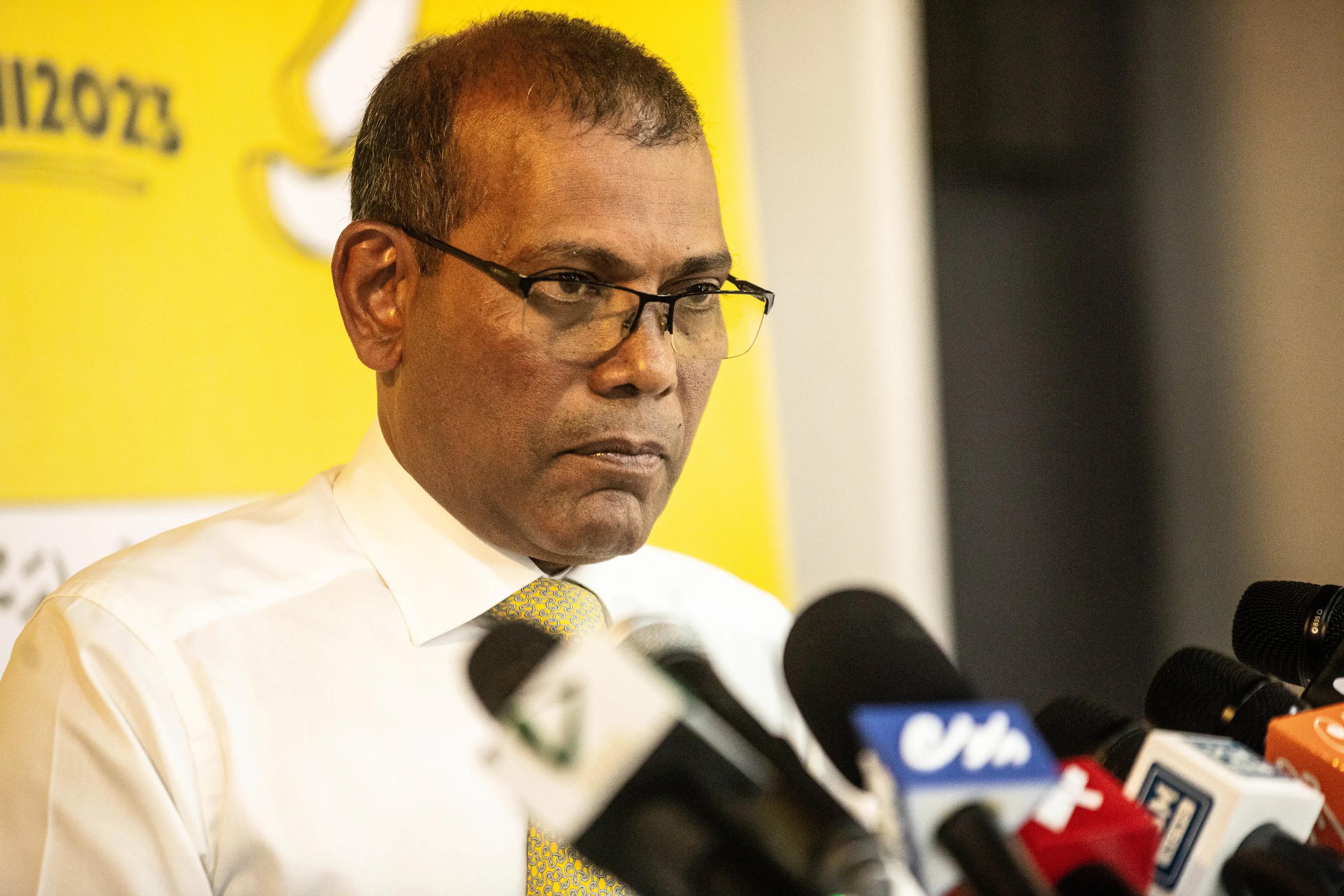
Former President's latest remarks reopen debate over his secular political philosophy and the direction of the MDP.
Former President Mohamed Nasheed has once again brought the ideological divisions within the Maldivian Democratic Party into the spotlight, warning that the party is increasingly embracing religious nationalism, xenophobic rhetoric and political fearmongering.
In a Facebook post published today, Nasheed accused elements within the MDP of abandoning the principles of openness, pluralism and democratic reform that once defined the party.
But when a founding figure of the MDP raises concerns about the direction of his own party, the question extends beyond internal politics. It reopens a long-standing debate over Nasheed's political philosophy and its place in a country where Islam is central to the constitutional and national identity.
Nasheed has long championed liberal democratic principles associated with Western political thought. During his presidency, from 2008 to 2012, his administration became embroiled in intense political and religious controversies, with conservative opponents accusing his government of undermining Islamic values.
The confrontation culminated in the political crisis of February 2012, when religious rhetoric and demonstrations became major features of the opposition campaign against his administration.
Although Nasheed's supporters viewed his approach as an effort to protect democratic freedoms, his critics questioned whether his liberal political vision adequately reflected the religious and cultural foundations of Maldivian society.
Now, years later, Nasheed is warning that the MDP is moving towards the very kind of religiously charged politics he has consistently opposed.
In his latest statement, he criticized claims that Zionists are taking over the country, describing such narratives as baseless and damaging to political discourse.
He also defended the slogan Birakaa Nulaa Majaa Kurun, claiming it attracted approximately 20,000 additional votes without significantly alienating other voters.
Nasheed argues that the party should return to its founding principles rather than mobilize public sentiment through fear and division.
Yet his intervention raises another question: how united is the MDP over its political identity, and whose vision will ultimately shape its future?
The party has experienced repeated disagreements over leadership, strategy and its direction. Nasheed's latest remarks suggest that the divisions are not merely personal or organizational. They concern fundamental differences over ideology, nationalism and the role of religion in political mobilization.
The timing and wider political implications of his intervention also warrant scrutiny. Is Nasheed independently challenging the party's direction, or does his statement reflect a broader struggle within the MDP over who controls its political narrative?
For the MDP, the challenge is significant. Its founding ideals, its present political strategy and the expectations of Maldivian voters are now part of an increasingly public debate.
Nasheed has sounded the alarm over what he sees as the abandonment of the party's original principles. Whether the party's leadership and supporters accept his assessment remains uncertain.
But one issue is clear: the debate over the MDP's identity is no longer confined to its internal ranks. It has reopened the wider national conversation about secular liberalism, religious identity and the direction of opposition politics in the Maldives.
The deeper question is whether a party divided over its own ideological foundations can establish a credible and coherent vision for governing a country where religion, national identity and political legitimacy remain closely connected.
For now, Nasheed's latest statement has exposed a debate that the MDP can no longer treat as merely an internal disagreement.
