
High Court Rejects Zaki’s Compensation Claim Over Failed Kurendhoo Resort Deal
6 November 2026 - 12:17
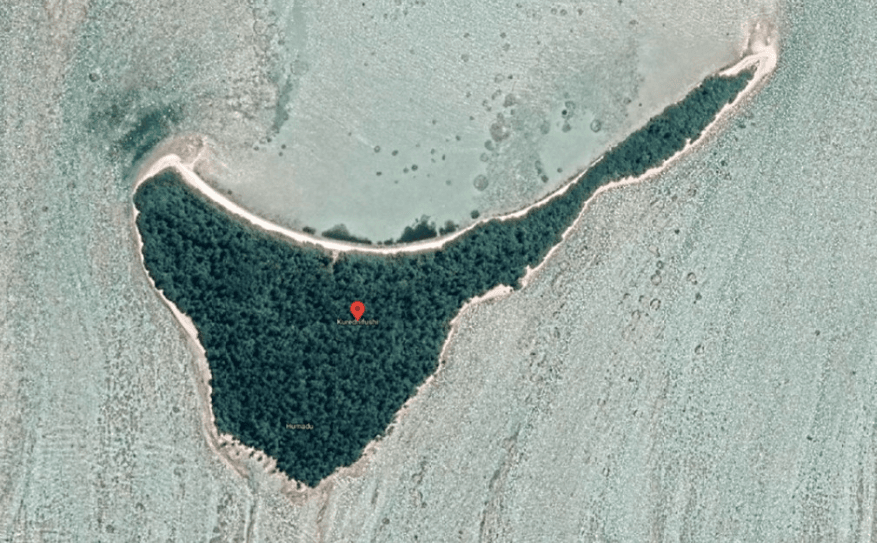
The High Court has upheld a Civil Court ruling dismissing a claim for compensation filed by Mohamed Zaki of M. Ahmadhiaadhu over a failed agreement to develop Kurendhoo into a 100-bed resort.
In a unanimous decision delivered on 5 November 2026, a three-judge panel ruled that Zaki was not entitled to the compensation he sought. The ruling upheld the Civil Court's judgment of 26 October 2022 in case number 2123/Cv-C/2020.
According to court documents, Zaki submitted a proposal to the Department of National Planning on 20 July 2011 to develop Kurendhoo as a 100-bed resort. In return, he proposed establishing water and sewerage systems in Th. Omadhoo and Th. Kinbidhoo.
The government accepted the proposal and gazetted it on 1 December 2011. On 23 January 2012, Zaki signed a Corporate Social Responsibility (CSR) agreement with the Ministry of Finance. Under the proposed arrangement, the resort would be developed with the government holding a five per cent stake.
However, on 17 April 2014, Zaki wrote to the then Tourism Minister requesting permission to pay the government in cash instead of carrying out the sewerage project.
In its response on 15 June 2014, the Tourism Ministry informed him that the CSR agreement would be cancelled and that the island's acquisition cost would be charged at USD 600,000 per hectare. The ministry also required Zaki to pay USD 1.092 million, representing 20 per cent of the acquisition cost, to the Maldives Inland Revenue Authority (MIRA) within 30 days, before signing a joint venture agreement. He was asked to confirm acceptance of the conditions within 14 days.
Zaki accepted the conditions in writing on 25 June 2014 and requested a draft joint venture agreement. On 2 July 2014, the Tourism Ministry instructed the Finance Ministry to proceed with the establishment of a joint venture company.
The Finance Ministry subsequently sent Zaki drafts of the joint venture agreement and company regulations on 11 August 2015. However, the agreement was never signed, and no joint venture company was established.
Following a government revision of resort island acquisition fees in 2016, Zaki wrote to the ministry on several occasions, requesting that the revised fees be reflected in the proposed joint venture agreement.
In its response to his final letter, the ministry said the government was not obliged to proceed with the arrangement because Zaki had not paid the required 20 per cent of the acquisition fee. The ministry informed him of this decision on 4 November 2019. The government maintained that no part of the payment had been made by that date, a fact Zaki did not dispute.
Zaki subsequently filed a case at the Civil Court in 2020.
In his appeal, Zaki argued that the original CSR agreement remained valid and that he had not made the payment because the ministry had failed to specify a date for signing the joint venture agreement.
However, the High Court concluded that the CSR agreement had ended when Zaki accepted the government's proposal to cancel it. The court also noted that the ministry's letter clearly required payment within 30 days.
The High Court further ruled that there was no error in the Civil Court's decision not to call the witnesses proposed by Zaki, as the relevant facts were sufficiently established through documentary evidence.
The case was heard by Chief Judge Abdullah Jameel Moosa, Judge Hassan Shafiu and Judge Hussain Mazid. The main judgment was authored by Judge Shafiu.