
President Says Record Reserves Shield Maldives from Debt Crisis
29 October 2026 - 07:52
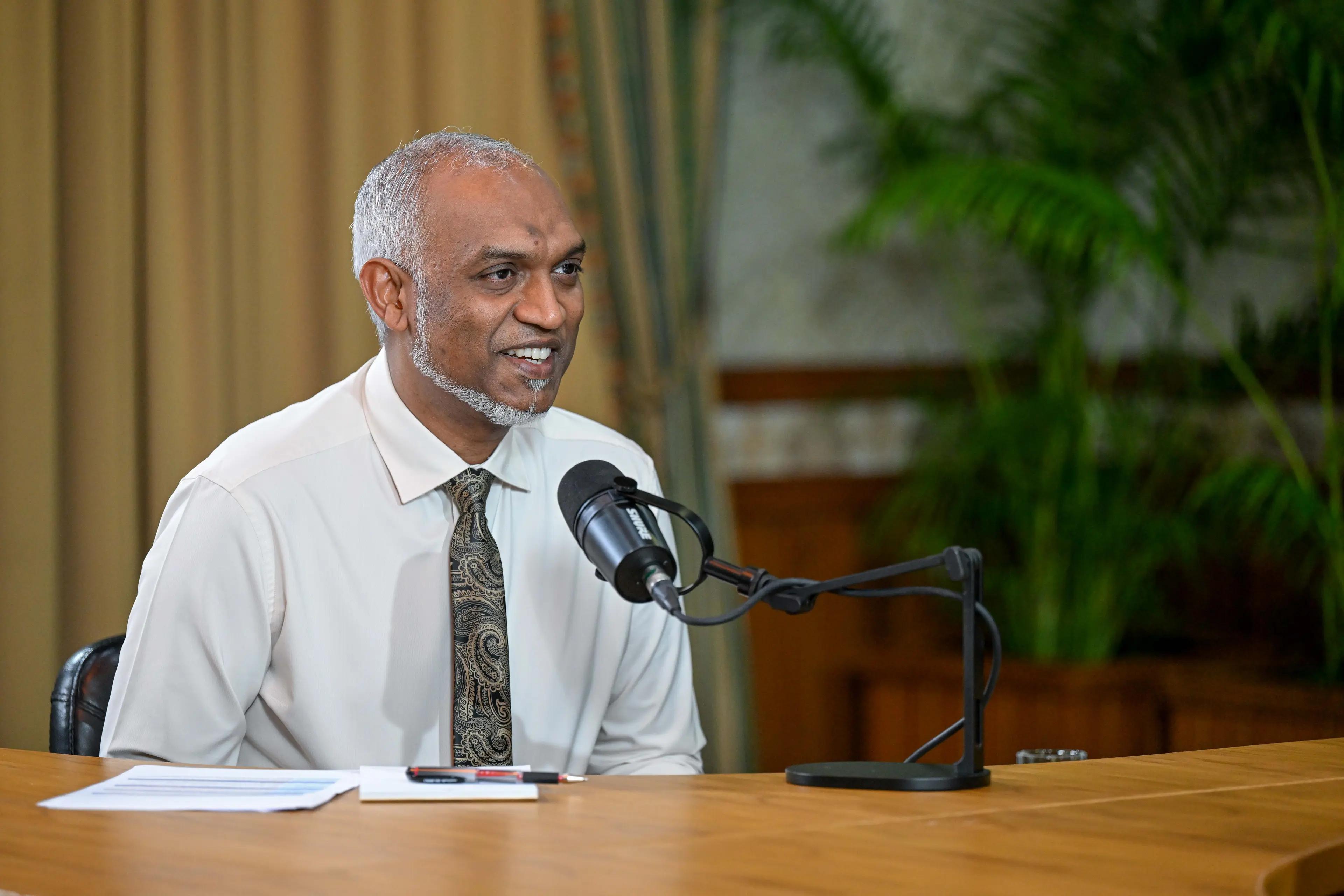
President Dr Mohamed Muizzu says the government has increased the country’s foreign reserves to record levels and protected the Maldives from the risk of a debt default through decisive measures.
Speaking during the sixth episode of Nation Chat, a podcast series produced by Public Service Media (PSM), the President said the Maldivian economy was on the brink of default when his administration took office, with the country struggling to meet its debt obligations.
He said the government’s first priority was to prevent a sovereign default. As a result of the measures taken, both gross reserves and usable reserves had increased to record levels by the beginning of this year.
The President said the government was also prioritizing expenditure cuts, reducing the budget deficit, identifying new sources of revenue and strengthening fiscal responsibility.
Although developments in the international arena, particularly the ongoing conflict in the Middle East, had adversely affected the Maldives’ tourism sector and tax revenues, he said the government was managing the situation while ensuring that projects continued without interruption.
Addressing government development projects, President Muizzu said none of the projects undertaken by the administration would increase the country’s debt burden.
He specifically highlighted the Rasmalé development project, describing it as a major housing initiative and assuring the public that the investment would not require the government to take on additional debt or loans.
The President explained that the project was being financed through future revenue streams and would therefore not place an additional burden on the state budget.
Speaking about the 2027 state budget, which is scheduled to be submitted to Parliament on October 29, the President said its primary objective was to complete and hand over at least 70 per cent of ongoing projects to the public.
He added that the upcoming budget had been prepared with particular emphasis on completing essential public infrastructure, including hospitals and schools, which he described as among the services most needed by the people.
